Friday, July 29, 2011
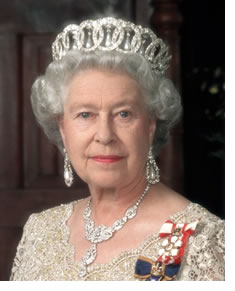
The Queen

Sunday, July 24, 2011
Tate Modern

Tuesday, July 19, 2011
Britain and Euro
In this video British prime minister David Cameron shows his support for the euro zone while continuing the conservative position that it will and should not join.
Many wonder why Great Britain never joined the euro. Tony Blair always adamantly wanted it to but his Chancellor, and long time rival Gordon Brown would not stand for it. Now the Euro is in deep trouble due in part to the economic fall of Greece and Portugal strengthening the claim from those who supported the UK remaining on the pound system. There are current political tensions between the UK and the countries in the euro zone pertaining to the UK not contributing finically to the euro crisis.
Christ Church College
Christ church is the largest of the Oxford colleges with more than 500 students. It is also the official head church of the Oxford Diocese.


This tower is one of the dominating spires gracing the Oxford skyline, although always intended, it was added long after the majority of the rest of the college was complete. The first two Harry Potter films were filmed in part at christ church college including the "great hall" scenes as well as various others.
Sunday, July 17, 2011
Union Jack
Despight the incredible fame of the union jack throughout the world, few know anything about it's origins. In 1603 James VI of Scotland became James I of England, thus uniting the kingdoms to this day.
At that time the official Flag of Scotland was the St. Andrews cross:

Whereas the official flag of England was the St. George cross:

So naturally the Union jack, in 1606 was originally a simple combination of the two:
.svg/800px-Union_flag_1606_(Kings_Colors).svg.png)
Cross of St. Patrick:

That is until the "Act of Union" in 1801 that united the Kingdom of Ireland with the Kingdom of Great Britain forming the United kingdom. Fortunately the Irish flag at the time was simply the cross of St. Patrick so only a minor change need be made. This of course, is the final and current version:
.svg)
Ashmolean museum

Thursday, July 14, 2011
Pitt Rivers Museum

Saturday, July 9, 2011
Edinburgh - Admiral Horatio Nelson
The monuments of Lord Admiral Horatio Nelson are not limited to trafalgar square in london. As a national and indeed international hero, the Scottish are equally grateful for his remarkable maritime valor that so decisively won many world shaping victories that ultimately saved the United Kingdom from Napoleonic invasion and granted Nelson immortal glory. The tower on the right hand side of this photo is the Nelson monument that stands higher than any structure in Edinburgh. It is designed to be shaped like a naval spyglass and after climbing some 170 steps, provides a spectacular panoramic view of the historic Scottish capital city. The planck at the bottom of the monument reads:
"To the memory of Vice Admiral Horatio Lord Nelson, and of the great victory of Trafalgar, too dearly purchased with his blood, the grateful citizens of Edinburgh have erected this monument: not to express their unavailing sorrow for his death: nor yet to celebrate the matchless glories of his life, but by his noble example to teach their sons to emulate what they admire, and like him, when duty requires, to die for their country"
Indeed Nelson's victories were not purchased without cost: by the time he was killed at Trafalgar, he had already lost an eye and an arm in battle. His final words remain immortal and are hung on a banner from the tower every year on October 21, the anniversary of Trafalgar:
"ENGLAND EXPECTS EVERY MAN TO DUE HIS DUTY".

Thursday, July 7, 2011
Research project
I am now fully utilizing the vast library system at Oxford University. As impressive as their collections are, I must say the system is a bit convoluted. To preserve the books they are not allowed out of the libraries on any condition. Furthermore, the books are spread out across many libraries throughout the city and country for that matter making it logistically difficult to access the books when needed. Nevertheless, I am successfully navigating the system and have already found some useful books and pamphlets pertaining to my research project on Devolution in the United Kingdom. Devolution is not a word most americans have even heard of but it is a important topic and way of thinking in the UK and commonwealth. Devolution is essentially the granting of powers from the central governments to more local governments or states. In the UK it generally refers to the power British parliament has bestowed to the governments of Scotland, Whales and Ireland. This has quite understandably been a subject of much controversy, a notable modern proponent being Tony Blair and a notable opponent being Margret Thatcher.
Monday, July 4, 2011
Blenheim Palace - England's greatest palace

During the war of the spanish succession in from 1701 to 1714 General John Churchill was commander and chief of the armies from five countries. Under churchill they never lost a battle. He is to this day considered one of England's greatest generals.
The war of the spanish succession was centered around the idea of unification of france and spain under a bourbon king. This would have greatly upset the balance of power in europe and - if not for john Churchill - may have ultimately led to a successful invasion of england.
Perhaps the most notable of Churchill's victories was the battle of Blenheim in Bavaria. The general made a forced march 250 miles with his 52,000 man army to save the city of Vienna from falling into enemy hands. The Franco-Bavarians were routed decisively and less than 25% of the French soldiers ever say France again. In honor of this great victory Queen Ann awarded Churchill the title "Duke of Marbourgh" , and a vast some of money to build a magnificent palace.
Unlike buckingham palace, Blenheim is serenely located in the country side in front of a huge lake built for the palace, but still very natural looking. It is truly the British Versailles. However, more importantly than the grandeur of the palace, or the Duke of Marbourgh is it's connection with an even greater World hero: Yes, Winston Churchill, a descendent of John Churchill, born and raised at Blenheim palace.Winston churchill was, aside from england greatest ever political leader, also a painter, author, horseman and a soldier who fought on the front lines on FIVE continents! He wrote all of his own speeches and I wish people thought more like him today.
Wednesday, June 29, 2011


Photo's from Oxford
Here is a Photo of University College Oxford. It is perhaps best known to americans as the college that Bill Clinton attended.

Tuesday, June 28, 2011
Oxford an awesome place!
There is good reason Oxford University has come to have the extremely prestigious reputation it does today. Despite common misconception, the university is not one, but a total of thirty eight colleges picturesquely set across the majestic city. Oxford is known as the city of domes and spires and upon arrival it is no guess as to why. The many chapels, clock towers, library domes, exc may remind you of cities like Rome or Salzburg. Although the colleges are in the middle of the city of 300,000, they are surrounded by many beautiful parks that can give it an almost rural feel especially in Christ church meadows where it is said J. R. Tolken got his inspiration for the beloved shire in "Lord of the Rings". The list of acclaimed graduates of this university over the past seven hundred years remains endless. It is not only a place of unparalleled history and education, but also of unique and interesting tradition of which I will explain more in posts to come.
National Gallery
The National gallery is a great place to go in London especially because it's free! It has thousands of spectacular paintings including works from Van Dyke, Di Vinci, Monet and Van Gogh. The gallery illustrates the close connection between art, religion and history. Personally, my favorite works are the large equestrian ones such as the van dyke painting of Charles I on a large buckskin horse that graces the center of the gallery. One thing that surprised me was the vast number of italian paintings. Apparently Charles I and many other British collectors over the years collected Italian works and either sold or donated them to the gallery. located in trafalgar square at the end of the mall, the architecture of the building itself is worth admiring, it was originally a large stable and latter converted into an art gallery.
Monday, June 27, 2011
Buckingham Palace and changing of the gaurds
Throughout the three days I was in london Buckingham Palace was the hub location and meeting place for my brother and I. The palace is the official residence of Her Royal Majesty Queen Elizabeth II. With beautiful classical designed, it first became the official residence of the Monarchy in 1837 upon Queen Victoria's accession to the throne. To determine if the queen is present you need look no further than the flag; if the gold and purple flag with HM's coat of arms is flying, then the queen is there, otherwise the union jack will be flying in which case she is probably meeting with dignitaries across the world or else spending time at one of her many other residences.
Arrival to England and Westminster Abbey
Me and my brother Benjamin landed in London at the Hethro airport on tuesday the twenty second of june.
After checking into our hotel by Chelsea bridge we immediately walked, along the Thames, to Westminster Abbey to ensure we got in before it closed. This was the first time I had ever been in, it is without a doubt one of the most important and historically significant churches in the world. Most people know it was the location of almost all major royal ceremonies over the past thousand years including the coronation of William the Conquerer, and every coronation since. But it is also the burial place for a vast number of non royal people who had made significant contributions to the world. Of particular interest is poets corner where lies William Shakespeare, Rudyard Kippling, Charles Dickens and Thomas Harding to name a few. I personally found it quite surprising to see Sir Isaac Newton and Charles Darwin buried here considering their modern affiliations with atheism. In recent years it has also been the location of princess Diana's funeral and the royal wedding of prince William and Kate Middleton. Although the Abbey is quite small when compared to Cathedrals like Notre Dame, it has beautifully proportioned and finely crafted architecture and is one of the oldest structures in london.
After checking into our hotel by Chelsea bridge we immediately walked, along the Thames, to Westminster Abbey to ensure we got in before it closed. This was the first time I had ever been in, it is without a doubt one of the most important and historically significant churches in the world. Most people know it was the location of almost all major royal ceremonies over the past thousand years including the coronation of William the Conquerer, and every coronation since. But it is also the burial place for a vast number of non royal people who had made significant contributions to the world. Of particular interest is poets corner where lies William Shakespeare, Rudyard Kippling, Charles Dickens and Thomas Harding to name a few. I personally found it quite surprising to see Sir Isaac Newton and Charles Darwin buried here considering their modern affiliations with atheism. In recent years it has also been the location of princess Diana's funeral and the royal wedding of prince William and Kate Middleton. Although the Abbey is quite small when compared to Cathedrals like Notre Dame, it has beautifully proportioned and finely crafted architecture and is one of the oldest structures in london.
Subscribe to:
Comments (Atom)